brand divider brand divider brand divider brand divider brand divider brand divider brand divider brand divider brand divider brand divider brand divider brand divider brand divider brand divider brand divider brand divider brand divider brand divider brand divider brand divider brand divider brand divider brand divider brand divider brand divider brand divider brand divider brand divider brand divider


We aim to move from linear waste management to circularity, keeping resources in continuous use to drive commercial and environmental value.


brand divider brand divider brand divider brand divider brand divider brand divider brand divider brand divider brand divider brand divider brand divider brand divider brand divider brand divider brand divider brand divider brand divider brand divider brand divider brand divider brand divider brand divider brand divider brand divider brand divider brand divider brand divider brand divider brand divider

Our approach


Importance to Woolworths Group

Packaging and food waste remain top customer concerns, amplified by high plastic use and low recovery rates. For our business, waste represents operational inefficiency and financial cost, but also an opportunity for circular solutions that keep resources in continuous use. The Australian Government’s 2035 target to double circularity and increase food waste recovery amplifies the imperative to continue transforming our approach to resource management.


Impact of prioritising this area

With thousands of products on our shelves, we can drive scalable circularity and resource recovery that creates commercial value for our business and at the same time, reduces our environmental footprint. This requires collaboration across the entire value chain – more investment in recycling infrastructure and enabling suppliers and customers to adopt more circular practices.

brand divider brand divider brand divider brand divider brand divider brand divider brand divider brand divider brand divider brand divider brand divider brand divider brand divider brand divider brand divider brand divider brand divider brand divider brand divider brand divider brand divider brand divider brand divider brand divider brand divider brand divider brand divider brand divider brand divider

Our goals

Repurpose more than 90% of our Group’s food surplus
Continue to transition own brand plastic packaging to include an average 30% recycled content
brand divider brand divider brand divider brand divider brand divider brand divider brand divider brand divider brand divider brand divider brand divider brand divider brand divider brand divider brand divider brand divider brand divider brand divider brand divider brand divider brand divider brand divider brand divider brand divider brand divider brand divider brand divider brand divider brand divider

Our journey to date

With the completion of our Woolworths Group Sustainability Plan 2025 we reflect on the meaningful progress we’ve delivered, including:

>20,000

tonnes of virgin plastic removed from our own brand packaging since 2018

>165M

equivalent meals to our food rescue partners

84%

of food waste diverted from landfill across the Group in F25

brand divider brand divider brand divider brand divider brand divider brand divider brand divider brand divider brand divider brand divider brand divider brand divider brand divider brand divider brand divider brand divider brand divider brand divider brand divider brand divider brand divider brand divider brand divider brand divider brand divider brand divider brand divider brand divider brand divider

Our initiatives

recycle and save

Recycle and save

recycle and save

Recycle and save

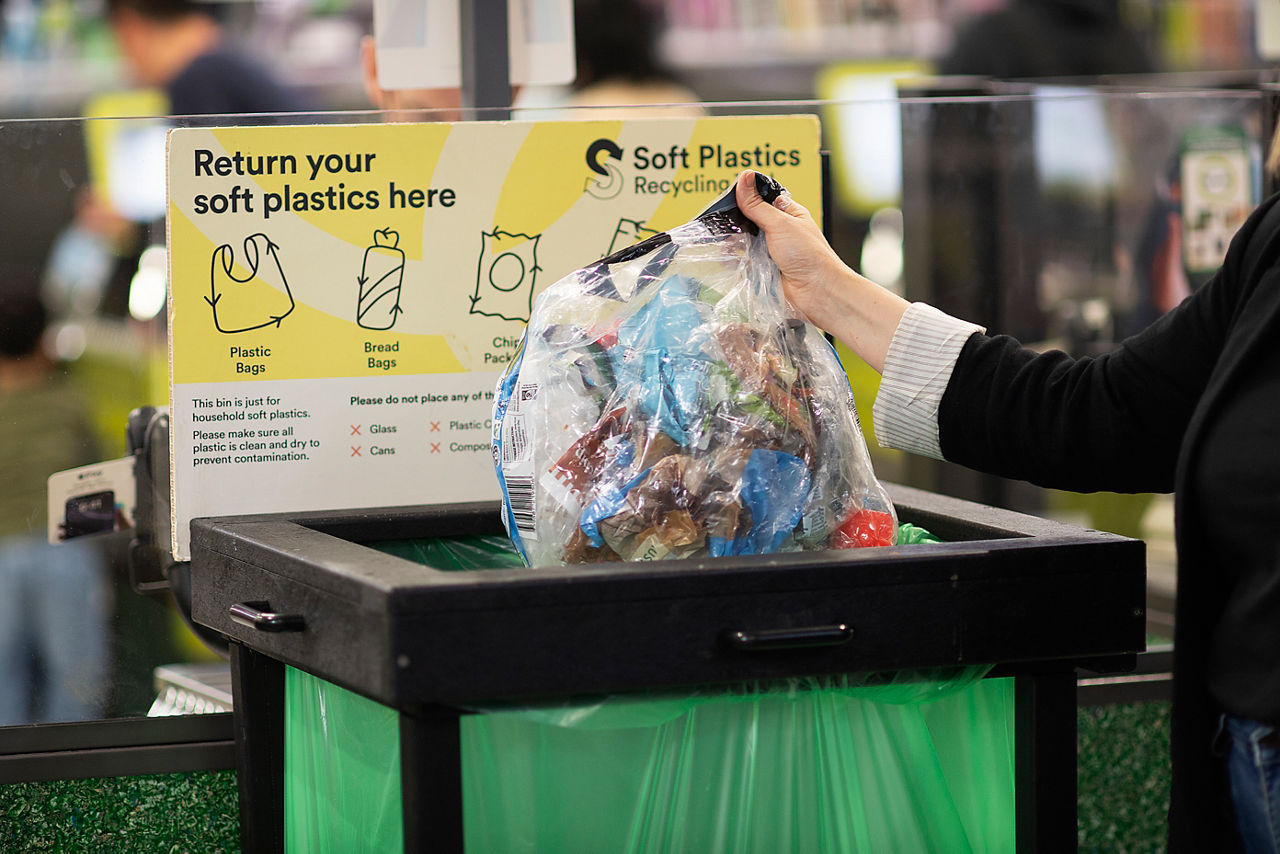
soft plastics

Collaborative transformation: soft plastics recycling

soft plastics

Collaborative transformation: soft plastics recycling

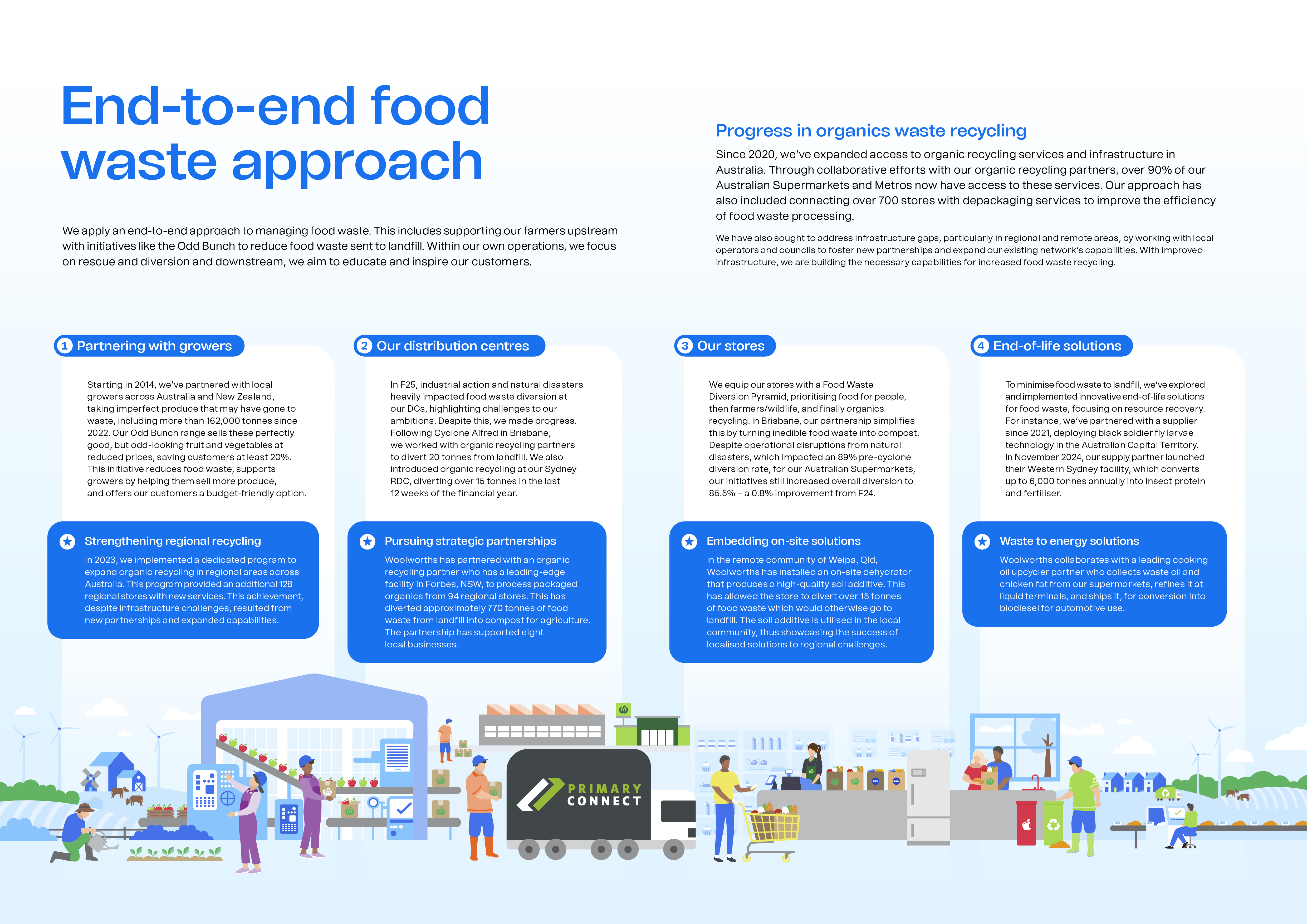
End to end food waste approach

End to end food waste approach

End to end food waste approach

End to end food waste approach

F25 Reporting Suite

Partnering for progress to reduce & recycle plastic packaging

F25 Reporting Suite

Partnering for progress to reduce & recycle plastic packaging

Unlocking value through Reuse

Unlocking value through reuse

Unlocking value through Reuse

Unlocking value through reuse

brand divider brand divider brand divider brand divider brand divider brand divider brand divider brand divider brand divider brand divider brand divider brand divider brand divider brand divider brand divider brand divider brand divider brand divider brand divider brand divider brand divider brand divider brand divider brand divider brand divider brand divider brand divider brand divider brand divider

Our partnerships


Packaging & recycling partners

iq renew
pact group
REPLAS
RETURN
save board
tomra cleanaway
visy
chep
future post

brand divider brand divider brand divider brand divider brand divider brand divider brand divider brand divider brand divider brand divider brand divider brand divider brand divider brand divider brand divider brand divider brand divider brand divider brand divider brand divider brand divider brand divider brand divider brand divider brand divider brand divider brand divider brand divider brand divider

Non-edible food waste partners

cleanaway
goterra
topsoil organics
veolia
jeffries
jr richards
brand divider brand divider brand divider brand divider brand divider brand divider brand divider brand divider brand divider brand divider brand divider brand divider brand divider brand divider brand divider brand divider brand divider brand divider brand divider brand divider brand divider brand divider brand divider brand divider brand divider brand divider brand divider brand divider brand divider

Find out more

Our customers tell us that one of their top concerns is packaging waste; plastic waste, in particular. We are focused on reducing plastic wherever possible, and working towards closing the loop by encouraging recycling through design, technology and clear communication to our customers and suppliers. 

Over the last five years we have implemented many initiatives to reduce virgin plastic and increase the average recycled content across a range of categories in our own brand products, resulting in a significant total virgin plastic reduction.

Where possible, we look at where we can replace plastic with alternative materials such as paper and cardboard as seen with our Cocktail tomato punnet.

To achieve our goal of making packaging more sustainable, we’re committed to collaborating with our trading partners, government and industry to reduce waste and transition our business to a circular economy.

Virgin plastic reduction

Since the commencement of our 2025 Plan we’ve implemented many initiatives to reduce virgin plastic and increase the average recycled content across a range of categories in our own products, resulting in a significant total virgin plastic reduction - 37% cumulative reduction since 2018. 

We’ve removed >20,000t total reduction of virgin plastic from circulation since 2018. To view our pathway to this achievement click here.

 
Initiative spotlight
 

In-store bakery clamshells 

Woolworths in-store bakery clamshells and lids, supplied to over 700 stores nationally, were updated in F23 with 80% rPET, resulting in 1,221 tonnes of virgin plastic removed from our packaging. All the rPET trays are recyclable, meaning our customers can add them to their kerbside recycling. 

Water bottles 

Reducing the weight of Woolworths 600ml water bottles removed 270 tonnes of plastic. We also improved the recyclability of the caps transitioning from coloured to uncoloured plastic. Additionally, converting the 500ml sparkling water bottle and 1.5L spring water bottle to 100% rPET eliminated 1,203 tonnes of virgin plastic from the supply chain.

Bread bags

We’re transitioning our own brand bread bags to use 30% recycled soft plastic, taking the mass balanced approach, which allows soft plastics to be transformed into new, food-grade packaging. This packaging started appearing on shelves in June 2025 across selected own brand bread products, and will save approximately 50 tonnes of virgin plastic annually.

Macro pouches 

The packaging of Macro brand dried fruit and nuts was redesigned from a non-recyclable plastic pouch to kerbside recyclable paper-based pouch. This innovation led to an 86% reduction in plastic, translating to over 40 tonnes of plastic removed annually, and was recognised by the Australian Institute of Packaging with two gold PIDA awards.


Embracing circular thinking and the power of partnerships, we are making changes across all parts of our value chain to prevent edible food from being wasted and instead redistributed through our food rescue partners to reduce food insecurity in Australian and New Zealand communities..

We apply an end‐to‐end approach to how we responsibly manage food waste. We support our farmers upstream to reduce food waste to landfill through initiatives such as the Odd Bunch, in our own operations across the Group with strategic partnerships to rescue and divert surplus food, and downstream by educating and inspiring our customers. As Today’s Fresh Food People, we understand the importance of reducing food waste by having the right amount of food on show, at the right time, at the right price and at optimal freshness, so that our customers can take it home and consume it all. But there is always a degree of surplus food, and through our partnerships, we can get this surplus to those who need it most. 

Across the Group, our focus remains on diverting all edible surplus food to our food rescue partners. Where non-edible surplus food remains, our stores share this with our valued farmers and wildlife groups. Food that can not be shared for human or animal consumption, is then sent to organics recycling to process into a range of products including nutrient rich compost and fertiliser. Unfortunately, in Australia, access to commercial organics recycling is not readily available outside of major cities, making it a challenge for many organisations.  In 2023, Woolworths implemented a dedicated program to expand organics recycling in regional areas across Australia by working with new technologies, onsite solutions, innovative and local operators and councils to foster new partnerships and expand our existing network capabilities. Through focused efforts and collaboration with our new and existing organic recycling partners, 128 regional and remote stores were connected to an organics recycling solution. 

Today, 92% of our Australian supermarkets and Metro stores now have access to organics recycling, with over 700 stores now connected to depackaging services to improve the efficiency of processing non-edible food waste. 

brand divider brand divider brand divider brand divider brand divider brand divider brand divider brand divider brand divider brand divider brand divider brand divider brand divider brand divider brand divider brand divider brand divider brand divider brand divider brand divider brand divider brand divider brand divider brand divider brand divider brand divider brand divider brand divider brand divider

For progress against our goals, see our annual Reporting Suite.